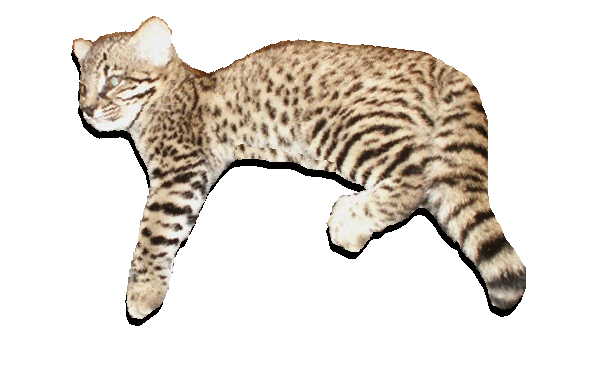
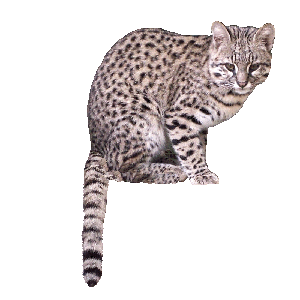
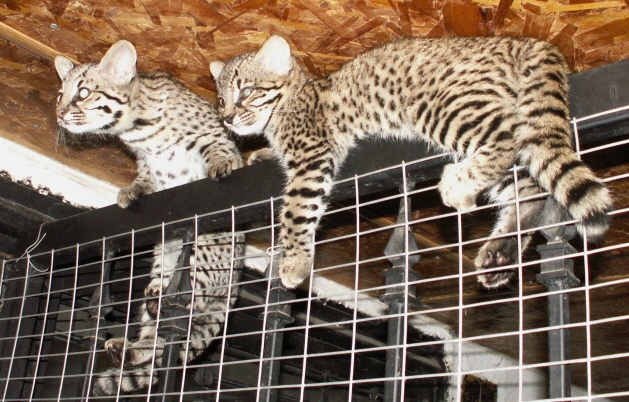
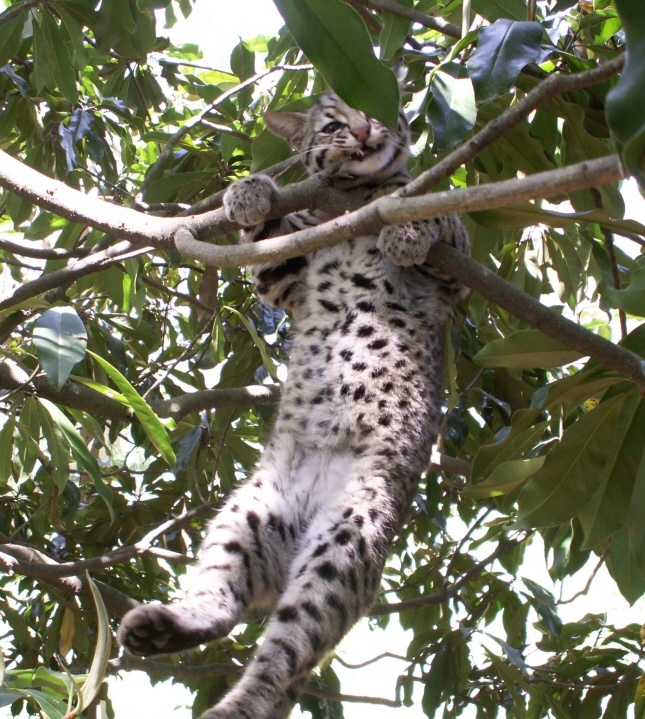
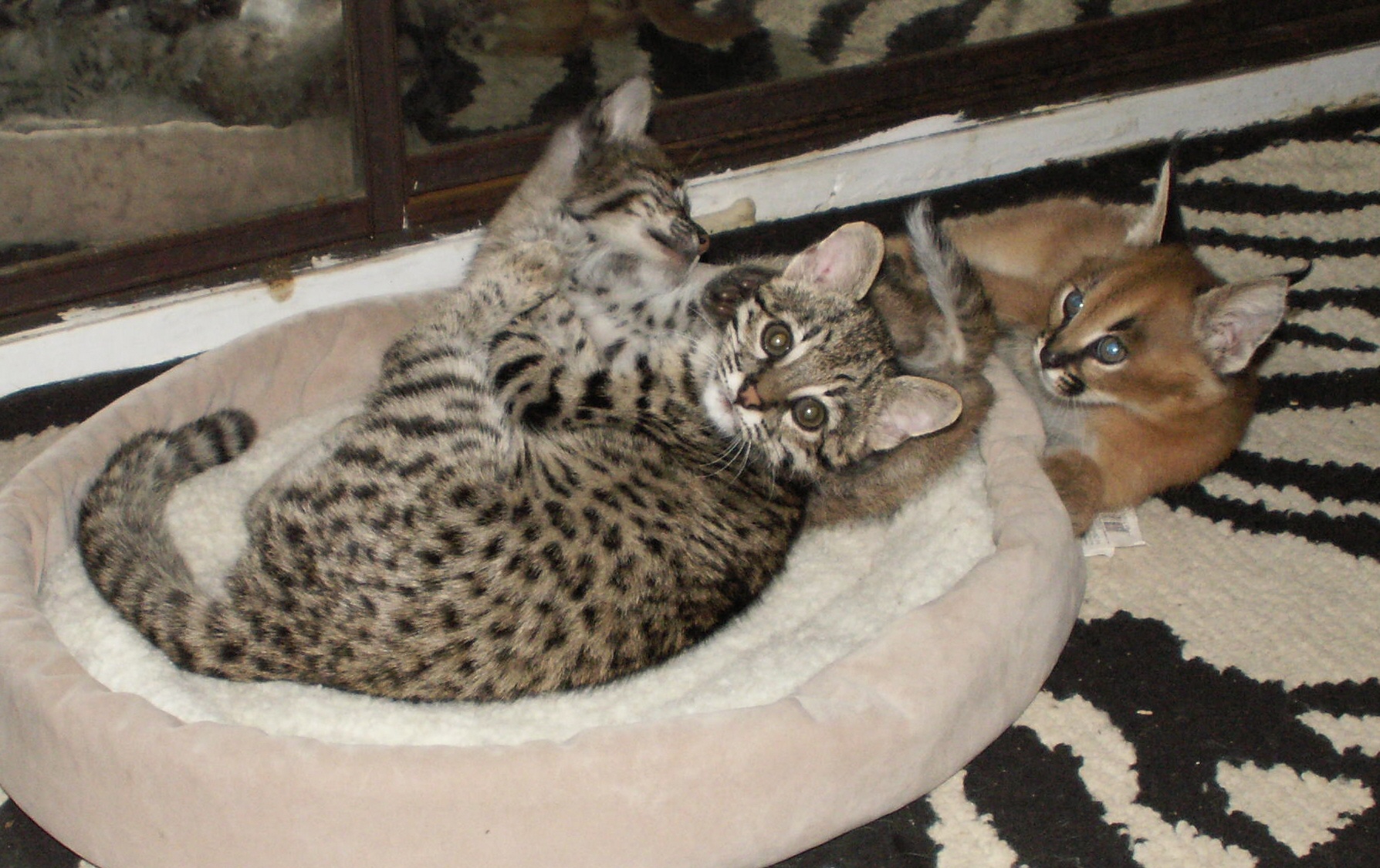
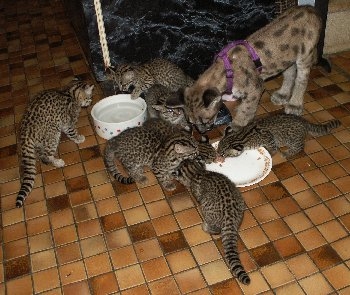
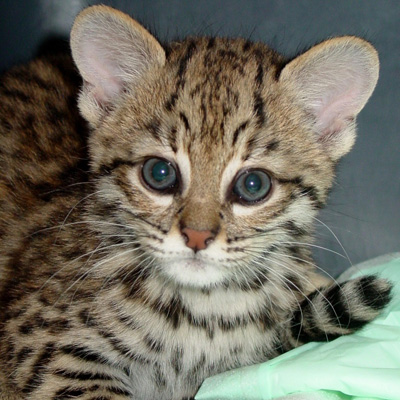
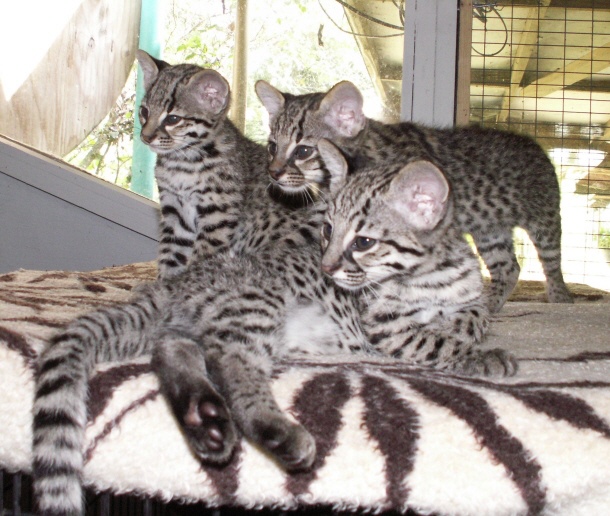
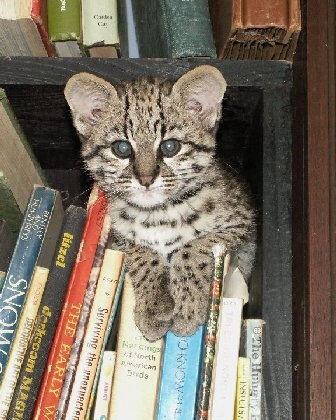
We have Geoffroy
kittens for sale
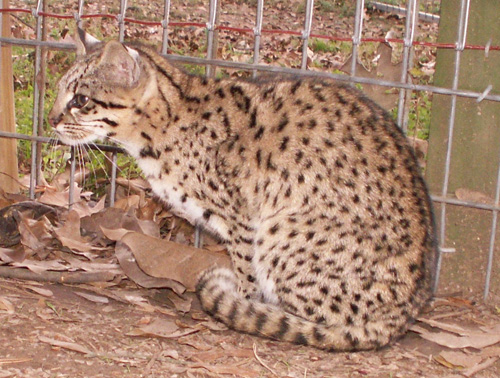
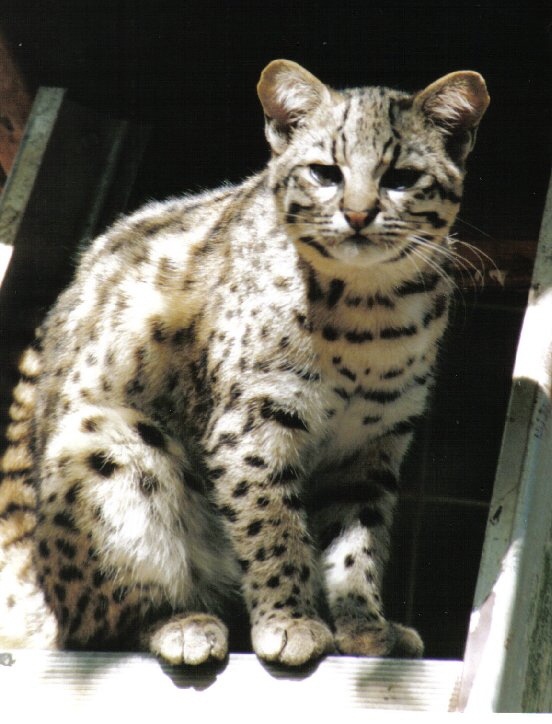
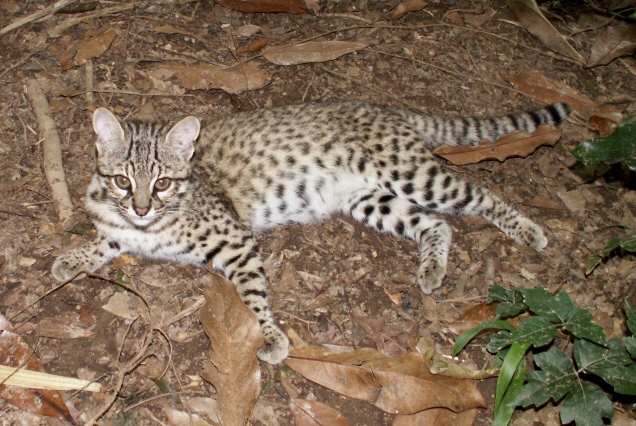
Oncifelis geoffroyi,the
Geoffroy’s cat,
is native to Argentina, Paraguay, Uruguay and
southern Brazil and parts of Chile in South
American. These cats are very adaptable, being
found in many types of habitat such as forest,
scrub, pampas and mountains. Geoffroy’s cats
and
Geoffroy kittens are not
endangered in their range countries, but to insure
that they are not over harvested for the fur trade,
they are given the same level of protection as
ocelots and margays in international trade. They are
listed as CITES I felines.
This small feline averages only 6 to
10 pounds at maturity. Geoffroy’s can be
beautifully spotted, or rosetted, and they have a
melanistic color phase. Adults can be fed a diet of
mice, rats, chicks, chopped chicken parts, rabbit or
beef. They like hard-boiled eggs, and some will eat
commercial cat food as well, including Zupreem,
which is made for wild felines.
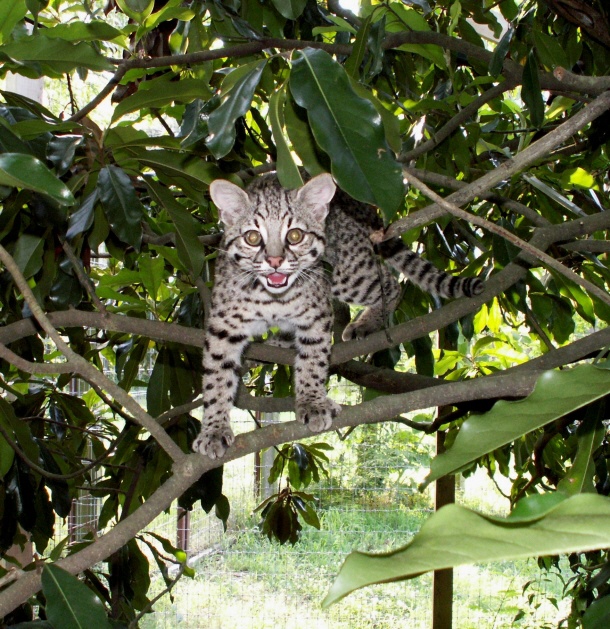
Geoffroy's are speedy little cats,
always on the move. When Geoffroy's are hand reared,
they can be extremely affectionate and purry,
inquisitive of people, and a joy to live with.
When rearing adolescent Geoffroy's in a home, it is
critically important that all doorways have double
entrances, as they can quickly slip past you and if
they get outdoors, their natural curiosity can cause
them to travel and get into trouble.
All adult Geoffroy's have very intense
urine when they mature. Like the other feline
species, they have an instinctual need to scent mark
their territory, and if it happens to be your home,
you will not enjoy the smell. So even though these
are loveable small felines, they are not ideal house
pets.
Instead, Geoffroy's can be housed
outside. Build them an environment that enables them
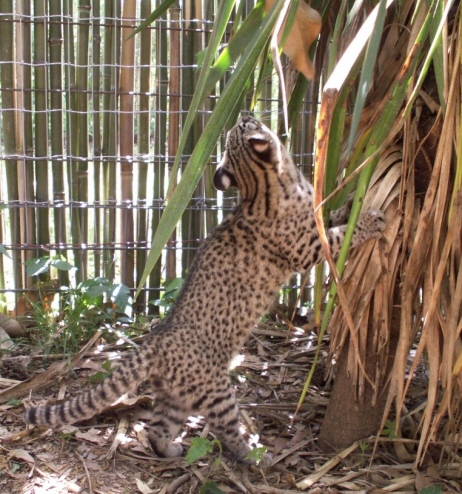
to exercise and expend their boundless energy. They
like to climb, and be up high and run across ramps.
They need plenty of hiding places too. The enclosure
wire needs to be small enough to prevent escape. You
will be surprised at the corrosive nature of their
urine. In just a matter of a few years, it can eat
through thick galvanized wire. Where they decide to
scent mark, such as doorways, will require some
maintenance to replace the wire.
The Geoffroy population in the US is
limited, and it is important that they be carefully
monitored to insure they do not go extinct. It is
very difficult to import new genetics into the US;
therefore breeders need to make efforts to insure
that offspring representing each genetic line is
placed into breeding facilities. The diversion of
important Geoffroy genetics into hybrid breeding
programs, or into pet homes where they are
sterilized and cannot be returned to breeding
condition has the potential to impair the survival
of this species.
At NOAH, we have had limited success
with our breeding programs, but are looking forward
to a brighter future. Three new potential breeding
pairs have been reared here and we hope to see
kittens in 2009.
Copyright© 2008 & 2009
N.O.A.H.
Feline Conservation Center
All rights reserved.
Site design by
Gary Fulgham